

Late Invoices Cost Small Businesses $39K a Year — Here's the Fix
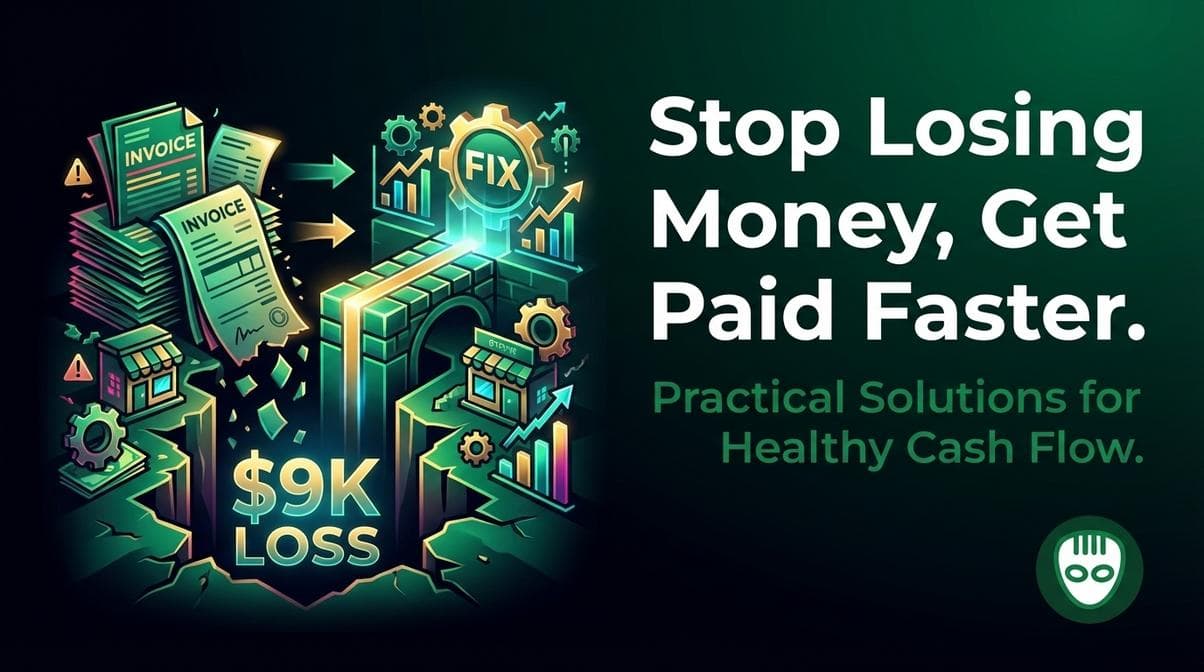
$39,000 a Year — That's What Late Invoices Are Costing You
More than half of small businesses in America are owed money right now on unpaid invoices — and the average amount sitting in limbo is $17,500. According to Intuit QuickBooks' 2025 Late Payments Report, 56% of small businesses have outstanding receivables, and research from the Kaplan Group shows the total annual cost of late payments averages a staggering $39,406 per company.
That's not a rounding error. That's a part-time employee. A marketing budget. A down payment on new equipment. Instead, it's money you've already earned that's trapped in someone else's bank account — and it's silently strangling your growth.
If you've ever skipped paying yourself, turned down a growth opportunity, or taken on expensive short-term debt because cash was tight, late invoices may be the root cause you never diagnosed.
The Late Payment Epidemic by the Numbers
The scope of this problem is hard to overstate. Here's what the data shows:
- 55% of all B2B invoiced sales in the U.S. are paid late
- 47% of small businesses report invoices overdue by more than 30 days
- 64% of businesses have invoices on their books that are 90+ days overdue
- 12% are waiting on invoices that are 120+ days late
- The average small business waits 29 days to collect on a net-30 invoice — meaning most payments arrive late even under standard terms
The Domino Effect on Your Business
Late invoices don't just mean delayed revenue. They trigger a chain reaction that damages every part of your operation:
| Impact Area | What Happens | How Common |
|---|---|---|
| Cash flow disruption | Can't cover operating expenses | 80%+ of affected businesses |
| Growth stalled | Delay or cancel expansion, hiring, or investment | Over 50% |
| Emergency borrowing | Forced into high-interest credit lines or loans | 34-50% |
| Payroll risk | Difficulty making payroll on time | 16% report severe impact |
| Credit score damage | Late payments to your own vendors cascade | 22% struggle to pay bills |
The Caine & Weiner Group reports that businesses with a higher volume of overdue invoices are 1.4x more likely to experience cash flow problems than those who stay on top of collections. And once you're in that cycle, it's incredibly hard to break free.
Why Small Businesses Keep Getting Burned
If late payments are this damaging, why do so many small-business owners tolerate them? Because the alternatives feel worse:
1. You Don't Want to Damage Relationships
Chasing invoices feels awkward. That client who owes you $8,000? They're also responsible for 20% of your revenue. You worry that a firm collections email will sour the relationship — so you wait. And wait. And wait.
2. You Lose Track
When you're running a business, invoicing isn't your primary job. Invoices go out, some get paid, some don't, and before you know it, three months have passed and you've forgotten who owes what. Without a system that flags overdue invoices automatically, things slip through the cracks.
3. Your Cash Flow Forecasting Is Reactive
Most small businesses don't forecast cash flow at all. Those that do rely on spreadsheets updated weekly or monthly — by which point the damage from late payments has already been done. You find out you have a cash shortfall when your bank balance hits zero, not six weeks before when you could have done something about it.
4. You Don't Know the True Cost
When an invoice is 15 days late, it doesn't feel like an emergency. But multiply that across dozens of invoices per year, factor in the borrowing costs and missed opportunities, and you're looking at $39,000 in annual damage. Most business owners simply never calculate this number.
Five Moves to Stop the Cash Flow Bleed
The good news: you don't need a collections agency or an MBA to fix this. You need better systems, better visibility, and a willingness to set boundaries.
1. Shorten Your Payment Terms
If you're offering net-60 or even net-30 terms, you're financing your clients' businesses for free. Consider these alternatives:
- Net-15 terms for new clients until they've established a payment track record
- Early payment discounts (e.g., 2% off for payment within 10 days — "2/10 net 30") to incentivize faster payment
- Milestone billing for project-based work so you're not waiting until completion for the full amount
- Deposits or retainers before work begins, especially for new client relationships
2. Automate Your Follow-Up
The single most effective thing you can do is remove the human awkwardness from collections. Set up automated payment reminders that go out:
- 3 days before the invoice is due (a friendly heads-up)
- On the due date (a reminder)
- 3, 7, and 14 days after the due date (increasingly firm reminders)
This isn't aggressive — it's professional. Your clients expect it. And when the reminders come from an automated system rather than a personal email, there's no relationship damage.
3. Know Your Cash Position in Real Time
You can't manage what you can't see. If you're checking your bank balance once a week and updating a spreadsheet once a month, you're flying blind. You need a system that shows you:
- Current cash on hand vs. upcoming obligations
- Expected inflows based on outstanding invoices and historical payment patterns
- Projected shortfalls before they happen, not after
This is where tools like Profit Leap's CFO bot earn their keep. By connecting directly to your QuickBooks, Xero, or Stripe account, an AI CFO gives you rolling cash flow forecasts that update in real time. Instead of discovering a cash gap when payroll is due, you see it three weeks out — giving you time to accelerate collections, delay a non-critical expense, or arrange a line of credit on your terms rather than in a panic.
4. Segment Your Clients by Payment Behavior
Not all late payers are equal. Track your clients' payment patterns and segment them:
- Reliable payers (consistently on time): reward them with your best terms and priority service
- Occasionally late (5-15 days): send automated reminders and monitor closely
- Chronically late (30+ days regularly): require deposits, shorten terms, or charge late fees
- Bad actors (60+ days, pattern of excuses): require payment upfront or consider firing them as clients
That last category is the hardest decision. But a client who consistently pays 90 days late and represents 15% of your revenue isn't actually contributing 15% of your revenue — once you factor in borrowing costs, admin time, and opportunity cost, they may be barely profitable.
5. Build a Cash Reserve Buffer
Even with perfect invoicing practices, some payments will arrive late. The difference between a minor inconvenience and a business crisis is whether you have a buffer. Aim for:
- 2-4 weeks of operating expenses as a minimum cash reserve
- A revolving line of credit established when you don't need it (the terms are always better when you're not desperate)
- A forecast that accounts for delays — if your average collection period is 35 days, don't plan as if money will arrive on day 30
The AI Advantage: From Reactive to Predictive
The strategies above work. But executing them manually — tracking payment patterns, updating forecasts, sending reminders, segmenting clients — adds hours of admin work to an already overstretched week.
This is precisely why AI-powered financial tools have gone from "nice to have" to essential for small businesses. An AI CFO doesn't just report what happened last month. It predicts what's coming and tells you what to do about it.
With a platform like CFO bot, you get:
- Automated cash flow forecasting that factors in your actual invoice collection patterns
- 24/7 availability — ask "Which clients are overdue?" or "Can I afford to make this purchase?" at midnight on a Sunday and get an instant, data-backed answer
- CPA backstop for complex questions like restructuring payment terms or handling tax implications of bad debt write-offs
- Integration with QuickBooks, Xero, and Stripe so your data flows automatically — no manual entry, no stale spreadsheets
The cost? A fraction of what you're already losing to late payments every year. When $39,000 is walking out the door annually, a tool that costs a few hundred dollars per month and recovers even a portion of that loss pays for itself many times over.
Stop Leaving Money on the Table
Late invoices aren't an inevitable cost of doing business. They're a solvable problem — one that most small businesses simply haven't prioritized because the damage is slow and invisible.
But now you know the number: $39,000 a year. You know that over half of small businesses are affected. And you know that the businesses breaking free from this cycle are the ones with real-time visibility, automated systems, and proactive forecasting.
The question isn't whether you can afford to fix your invoicing problem. It's whether you can afford not to.
Ready to put your finances on autopilot? Try CFO bot risk-free with a 7-day money-back guarantee →