

Online Lenders Promise Fast Cash — But 60% of Borrowers Pay More
The Online Lending Boom Has a Dirty Secret
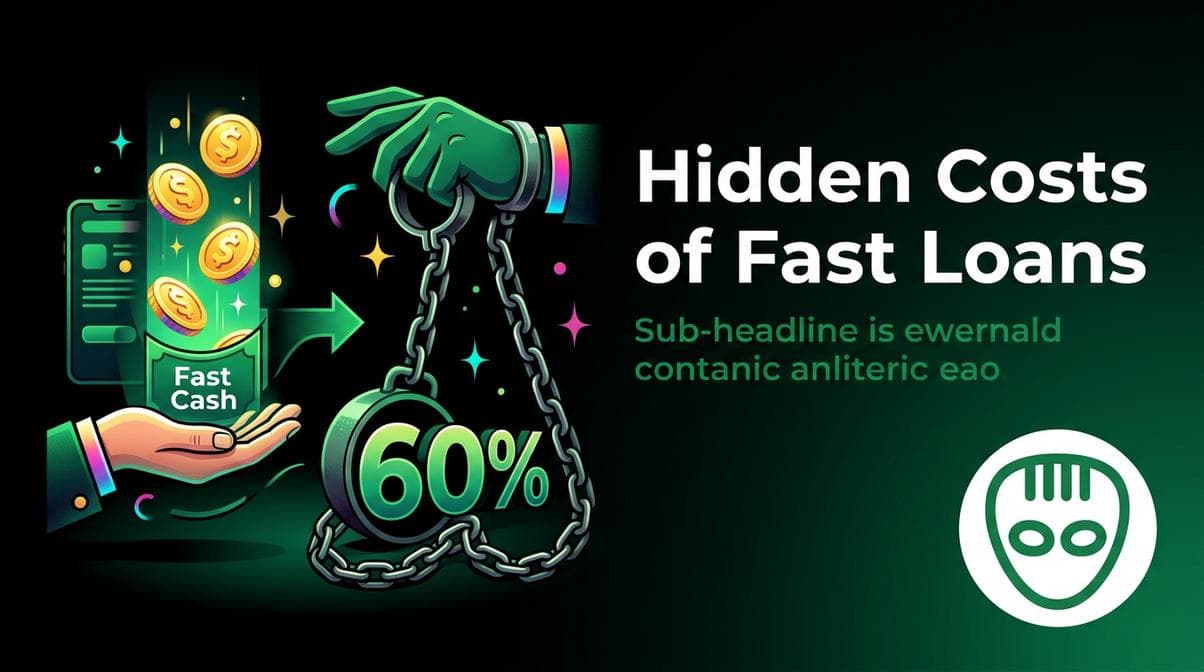
Online lending to small businesses just hit a five-year high — and most borrowers are paying far more than they signed up for. According to the Federal Reserve's 2026 Report on Employer Firms, applications at online lenders have increased for the fifth consecutive year, with 60% of small-business owners reporting that the actual cost of borrowing was higher than they expected.
That's not a rounding error. It means the majority of small businesses that turned to online lenders for quick capital got blindsided by fees, rates, or terms they didn't fully understand. And with inflation (31%) and cash flow (29%) still ranking as the top challenges facing small businesses, the last thing you need is a financing decision that makes your cash position worse.
Here's what the data actually shows — and how to make smarter financing decisions in 2026.
Why Small Businesses Are Flocking to Online Lenders
The appeal is obvious. Traditional bank loans take weeks. SBA loans can take months. Meanwhile, online lenders promise funding in 24-48 hours with minimal paperwork. For a business owner staring at a payroll deadline or an unexpected expense, speed wins.
The Fed survey confirms this trend: 60% of small employer firms applied for financing in the past 12 months, with the most common reasons being:
- Meeting operating expenses (56% of applicants)
- Pursuing expansion or new opportunities (46%)
- Covering cash flow gaps (a recurring theme across sectors)
And the share applying at online lenders keeps climbing. Five straight years of growth signals that small businesses view these platforms as a legitimate — sometimes preferred — alternative to banks.
The Funding Gap Is Real
It's not just convenience driving this shift. 22% of financing applicants received none of the funding they sought, while only 42% received the full amount. That means more than half of small businesses that applied for financing came up short.
When banks say no — or say "wait" — online lenders fill the gap. The problem isn't that businesses are using them. The problem is what they're agreeing to.
The Hidden Costs Most Borrowers Don't See Until It's Too Late
The Fed's finding — that 60% of online borrowers paid more than expected — points to a systemic transparency problem. Here's where the costs hide:
Factor Rates vs. Interest Rates
Most online lenders quote a factor rate (e.g., 1.3) instead of an annual interest rate. A $50,000 loan with a 1.3 factor rate means you repay $65,000. That sounds like 30% — but if the repayment term is 6 months, the effective APR is closer to 60-80%.
Traditional banks quote APR. Online lenders quote factor rates. The math is designed to look smaller than it is.
Origination and Processing Fees
Many online lenders charge origination fees of 2-5% that are deducted from your loan proceeds. So a $50,000 loan might only put $47,500 in your account — but you're still paying interest on the full $50,000.
Daily or Weekly Repayment
Unlike monthly bank loan payments, many online lenders use daily or weekly ACH withdrawals. This creates a constant drain on your operating account that can wreak havoc on cash flow — the very problem the loan was supposed to solve.
Prepayment Penalties
Some online lenders lock you into the full cost of borrowing regardless of when you repay. Pay off a 12-month loan in 6 months? You might still owe the same total amount. That's the opposite of how traditional lending works.
The True Cost Comparison
| Financing Option | Typical APR | Speed to Fund | Repayment | Transparency |
|---|---|---|---|---|
| SBA 7(a) Loan | 6-10% | 2-3 months | Monthly | High |
| Bank Term Loan | 7-12% | 2-6 weeks | Monthly | High |
| Bank Line of Credit | 8-15% | 1-3 weeks | Monthly (interest only) | High |
| Online Term Loan | 15-80%+ | 1-3 days | Daily/Weekly | Low |
| Merchant Cash Advance | 40-150%+ | 1-2 days | Daily (% of sales) | Very Low |
| Invoice Factoring | 15-35% | 1-3 days | Upon collection | Medium |
The speed advantage of online lending is real. But the cost difference between a 10% bank loan and a 60% online loan on $100,000 is $50,000 in extra interest. That's not a rounding error — it's a second employee's salary.
5 Moves to Make Before You Borrow
1. Calculate the True APR Before You Sign
Don't accept a factor rate at face value. Use a free APR calculator to convert the quoted terms into an annualized rate. If the lender won't give you a clear APR, that's a red flag.
Rule of thumb: If the effective APR exceeds 30%, the loan should only be for a short-term, revenue-generating opportunity with a clear return — never for covering ongoing operating expenses.
2. Explore Every Alternative First
The Fed survey found that many businesses went straight to online lenders without fully exploring lower-cost options:
- SBA microloans (up to $50,000 at rates as low as 6-8%)
- Community Development Financial Institutions (CDFIs) that serve underserved markets
- Business lines of credit from your existing bank (often available faster than you'd think)
- Invoice factoring if your cash flow problem is really a collections problem
3. Fix the Cash Flow Problem, Not Just the Symptom
Borrowing to cover payroll or operating expenses is a warning sign. If you need financing to keep the lights on, the real issue is usually one of these:
- Late-paying customers stretching your receivables
- Poor visibility into upcoming expenses
- Seasonal fluctuations you haven't planned for
- Pricing that doesn't account for all your costs
This is where real-time cash flow forecasting becomes essential. You can't manage what you can't see, and most small businesses are flying blind — using spreadsheets that are outdated the moment they're created.
An AI-powered tool like CFO bot connects directly to your QuickBooks, Xero, or Stripe account and provides rolling cash flow forecasts that update automatically. Instead of scrambling for emergency financing when cash gets tight, you see the gap coming weeks in advance — giving you time to collect receivables, adjust spending, or arrange lower-cost financing on your terms.
4. Negotiate Terms — Yes, Even With Online Lenders
Most business owners don't realize that online lending terms are often negotiable, especially for repeat borrowers or businesses with strong revenue. Push back on:
- Origination fees (ask for a reduction or waiver)
- Prepayment penalties (insist on a declining balance structure)
- Repayment frequency (monthly instead of daily, if your cash flow supports it)
5. Get a Second Opinion Before Signing
A human CFO would never let you sign a high-cost loan without analyzing whether the math works. But most small businesses don't have a CFO — and that's exactly how expensive financing decisions happen.
This is where having access to an AI CFO makes a measurable difference. Profit Leap's CFO bot doesn't just forecast cash flow — it can help you evaluate whether a financing decision actually makes sense for your specific situation, backed by a CPA for complex questions. It's the financial second opinion that costs a fraction of a human CFO's hourly rate, available 24/7 whenever you're facing a decision.
The Bottom Line: Speed Isn't Worth It If the Math Doesn't Work
Online lenders serve a legitimate purpose. When you need capital fast and have a clear, high-return use for it, speed has real value. But the Fed's data is unambiguous: most small businesses are paying more than they expected, and in an environment where cash flow is already the #2 challenge facing small businesses, overpaying for capital can turn a temporary cash crunch into a long-term financial problem.
The businesses that thrive in 2026 won't be the ones that borrow the fastest. They'll be the ones that see cash flow problems before they become emergencies — and have the data to negotiate better terms when they do need financing.
The smartest financing decision you can make this year might not be which lender to use. It might be investing in the financial visibility that keeps you from needing a high-cost loan in the first place.
Ready to put your finances on autopilot? Try CFO bot risk-free with a 7-day money-back guarantee →